
China Top Material Handling Equipment Suppliers?
China’s material handling equipment sector is moving from basic lifting tools toward connected, automated warehouse systems. Forklifts, conveyors, stackers, automated storage, and warehouse software now work as one operating system. MHI’s 2024 Annual Industry Report shows that supply chain leaders continue increasing investment in automation and digital technologies. That shift changes how buyers should assess China’s top suppliers.
A credible supplier must offer more than a low factory price. Buyers should examine load capacity, battery performance, safety controls, software compatibility, spare-parts availability, and after-sales response times. China’s Ministry of Industry and Information Technology has also emphasized intelligent manufacturing and industrial digitalization. This supports the growth of technically capable manufacturers, but capability still varies widely. A modern showroom is not proof.
This guide evaluates leading Chinese Material Handling equipment suppliers through practical criteria. These include manufacturing experience, certification, export records, engineering depth, customization, and documented customer support. The China Federation of Logistics and Purchasing continues to track the country’s expanding logistics activity, which creates strong demand for efficient internal transport systems. Yet market size alone cannot guarantee product reliability. Some supplier rankings rely too heavily on online visibility. That weakness deserves attention.
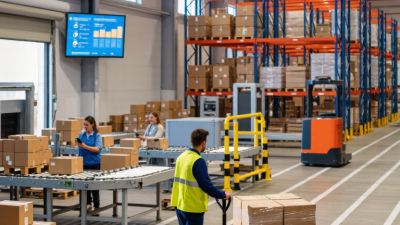
Real performance appears on the warehouse floor. A forklift must start reliably during a cold morning shift. A conveyor should maintain stable movement under repeated loads. Software should report failures before operators discover them. The best suppliers combine measurable engineering standards with responsive service. This article provides a careful starting point, not a final purchasing decision. Audits, site visits, sample testing, and contract reviews remain essential before selecting a long-term partner.
Definition and Scope of Material Handling Equipment in China
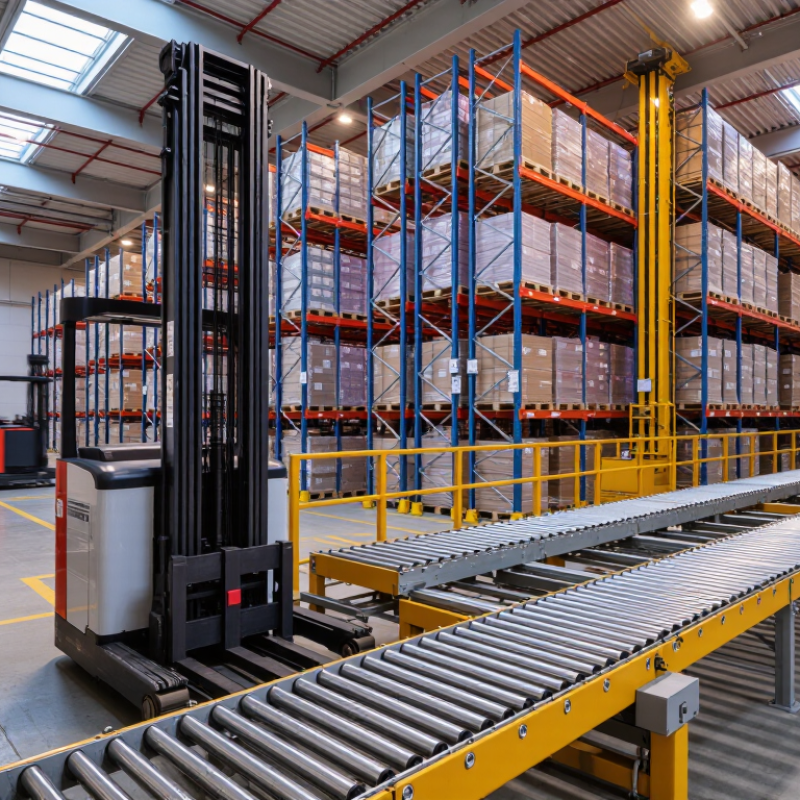
Material handling equipment in China covers the tools and systems used to move, store, protect, and control goods. Its scope includes forklifts, pallet trucks, conveyors, cranes, lifts, automated storage systems, shelves, carts, and warehouse software. These solutions support factories, ports, distribution centers, cold-storage facilities, and construction sites.
The right equipment depends on load weight, aisle width, floor condition, storage height, and operating frequency. For example, a narrow warehouse may require compact lifting equipment and guided movement systems. A busy distribution center may need conveyors, barcode tracking, and automated sorting. Safety features also matter, including load limits, emergency stops, operator visibility, and maintenance access. In practice, specifications can look impressive on paper. They may perform differently under dust, humidity, uneven floors, or rushed schedules.
Tips: Measure real working conditions before comparing suppliers. Ask for test data, service response times, spare-parts availability, and operator training. Check whether the equipment integrates with existing warehouse systems. Small details matter. A quiet motor, clear controls, and easy battery access can reduce daily frustration. Yet no supplier can remove every operational risk. Buyers should review their own workflow honestly, because poor layout or weak maintenance can undermine even well-designed equipment. Reliable suppliers should provide traceable technical documents, realistic capacity figures, and clear inspection records rather than vague performance claims.
Material handling equipment in China covers the movement, lifting, storage and automated transportation of goods. The chart compares representative rated load capacities commonly associated with major equipment categories. Actual capacity varies by model, configuration, lifting height, operating environment and applicable safety standards; these figures are for scope definition rather than supplier ranking.
Key Product Categories Offered by Chinese Suppliers
Chinese material handling equipment suppliers cover a broad range of warehouse and factory needs. Their main product categories include electric forklifts, diesel forklifts, pallet trucks, stackers, and reach trucks. Each machine supports a different working condition. For example, a compact electric pallet truck suits narrow warehouse aisles and short-distance movement. A counterbalance forklift handles heavier loads near loading docks.
Storage and movement systems form another important category. Suppliers commonly provide conveyors, mobile racks, shelving, dock equipment, and lifting tables. Some also develop automated guided vehicles and autonomous mobile robots for repetitive transport tasks. These systems can reduce manual travel, but floor conditions and software integration require close checking. Automation is not always the cheapest answer.
From practical purchasing experience, specifications deserve more attention than attractive catalog photos. Buyers should compare rated capacity, lifting height, turning radius, battery type, charging time, and spare-parts availability. A machine rated for 2,000 kilograms may perform poorly when the load sits far forward. Small details matter. Chinese suppliers often support custom forks, non-standard platforms, cold-storage options, and local voltage requirements. However, customization can increase lead time and maintenance difficulty. Factory audits, sample testing, operator training, and documented quality inspections help verify reliability. Some quotations look complete, yet exclude installation or replacement batteries. Ask clearly before ordering.
Leading China-Based Material Handling Equipment Suppliers
China Top Material Handling Equipment Suppliers?
Leading China-Based Material Handling Equipment Suppliers
China-based material handling equipment suppliers now serve warehouses, factories, ports, and distribution centers worldwide. Their product ranges may include forklifts, conveyors, pallet trucks, stackers, automated storage systems, and warehouse robots. According to the International Federation of Robotics’ World Robotics 2024 report, China installed 276,288 industrial robots in 2023. That represented about 51% of global installations. This figure signals strong manufacturing depth, but it does not prove every supplier offers dependable service.
Experienced buyers should examine more than unit price. Check load capacity, lifting height, battery performance, duty cycles, spare-parts availability, and operator training. MHI’s 2024 Annual Industry Report found that 55% of supply chain professionals expected technology investment to increase within two years. Automation demand is rising. Still, poorly matched software or weak local support can reduce the value of expensive equipment. A factory visit, sample inspection, and documented performance test remain practical safeguards.
Tips: Ask for ISO 9001 records, third-party test reports, warranty terms, and recent export references. Compare total ownership cost, not only the quotation. Verify whether electrical components suit your country’s standards. One overlooked detail matters: aisle width can change the required truck specification. No supplier is perfect. Even a polished catalog needs independent checking.
Supplier Selection Criteria for Industrial Buyers
When industrial buyers compare material handling equipment suppliers in China, price should not lead the decision. Equipment must match the warehouse layout, load weight, aisle width, and daily operating hours. A pallet truck for occasional use needs different engineering from a forklift working three shifts.
Request drawings, load charts, test records, and maintenance schedules. Check whether rated capacity changes at different lifting heights. It often does. Ask how motors, batteries, brakes, and hydraulic parts are tested before shipment. A factory audit, live video inspection, or independent quality check can reveal details that brochures omit. Look for documented quality systems and safety compliance for the destination market. Certificates alone are not enough.
Service capability deserves equal attention. Confirm spare-parts availability, technician response times, warranty exclusions, and remote troubleshooting procedures. Ask for two recent customer references with similar warehouse conditions. Measure the supplier’s communication during this process. Slow replies before payment may become slower after installation. I have seen buyers focus heavily on unit cost, then underestimate commissioning delays and operator training. That is a costly blind spot. A practical supplier should explain limitations clearly, accept technical questions, and provide usable manuals in the buyer’s working language. Trial operation with a representative load is preferable to relying on specifications alone.
China Top Material Handling Equipment Suppliers? - Supplier Selection Criteria for Industrial Buyers
| Selection Dimension | Recommended Weight | Practical Buyer Benchmark | Evidence to Request | Evaluation Method |
|---|---|---|---|---|
| Product and Application Fit | 20% | Rated capacity, lift height, aisle width, duty cycle, floor conditions, and ambient temperature match the application without relying on maximum ratings. | Technical datasheets, load charts, layout review, duty-cycle calculation, and application references with comparable operating conditions. | Score 5 when the proposed configuration meets all operating requirements with a documented safety margin; score 1 when major parameters remain unverified. |
| Quality Management | 15% | A documented quality management system, controlled inspection records, traceability for critical components, and defined nonconformance procedures. | Current ISO 9001 certificate where applicable, quality manual, inspection and testing plan, sample reports, and corrective-action records. | Verify certificate scope and validity independently; review quality records for a representative production order. |
| Safety and Regulatory Compliance | 15% | Safety functions, guarding, emergency stops, warning labels, manuals, and conformity documentation are appropriate for the destination market. | Risk assessment, test certificates, declaration of conformity when required, safety manual, electrical documentation, and inspection checklist. | Use a third-party or internal technical review before approval; treat missing safety documentation as a critical risk. |
| Total Cost of Ownership | 15% | Compare purchase price, freight, installation, commissioning, energy or fuel use, preventive maintenance, consumables, downtime, and end-of-life costs. | Five-year cost model, spare-parts price list, energy-consumption data, maintenance schedule, and installation quotation. | Calculate total cost over the planned service period rather than selecting solely on initial purchase price. |
| Lead Time and Production Capacity | 10% | Standard equipment commonly planned within approximately 4–12 weeks; customized systems require a separately documented engineering and manufacturing schedule. | Production plan, capacity statement, milestone schedule, stock position for standard parts, and on-time delivery records. | Score against contractual milestones and require written notification procedures for schedule changes. |
| After-Sales Service and Response | 10% | Technical acknowledgement within one business day, remote troubleshooting capability, clear escalation routes, and defined on-site service coverage. | Service organization chart, service-level agreement, escalation procedure, technician coverage map, and maintenance training plan. | Test the support process with a sample technical inquiry and assess the quality and speed of the response. |
| Spare-Parts Availability | 5% | Critical wear parts are identified, part numbers are traceable, and normal replenishment lead times are stated in writing. | Recommended spare-parts list, service parts catalogue, inventory policy, replenishment lead times, and obsolescence policy. | Check availability of safety-critical and high-wear components before issuing a purchase order. |
| Warranty and Contract Protection | 5% | A clearly defined warranty period, commonly 12–24 months depending on equipment type and contract, with exclusions and remedy procedures stated. | Warranty terms, acceptance criteria, defect-reporting process, liquidated-damages provisions, and insurance documents where relevant. | Compare warranty coverage by component and require written agreement on response time and corrective action. |
| Export, Packaging, and Logistics | 3% | Export documentation, packaging suitable for the transport mode, moisture and corrosion protection, and clearly defined delivery terms are available. | Packing specification, commercial invoice template, packing list, shipping marks, delivery-term quotation, and loading photographs. | Conduct a packaging review and assign responsibility for damage, customs documentation, unloading, and installation. |
| Environmental and Operational Sustainability | 2% | Measured energy consumption, durable and repairable design, waste-control practices, and environmental management procedures relevant to the project. | Energy data under stated test conditions, environmental policy, ISO 14001 certificate where applicable, material declarations, and recycling guidance. | Compare verified operating data under equivalent duty cycles and include energy and maintenance impacts in the cost model. |
| Total | 100% | Use a weighted score from 1 to 5, apply minimum pass requirements for safety and compliance, and validate the final selection through technical and commercial due diligence. | ||
Note: The benchmarks above are practical screening guidelines for industrial buyers, not universal specifications. Final requirements should be confirmed against the application, destination-market regulations, contract terms, and applicable equipment standards.
Quality, Certification, Customization, and Export Services
China Top Material Handling Equipment Suppliers?
Quality should begin with measurable controls, not attractive catalog photos. During factory audits, buyers should review steel traceability, weld inspection records, load testing, and final assembly checks. MHI’s 2024 Annual Industry Report, based on more than 2,000 supply chain professionals, found that 83% expect greater use of robotics and automation within five years. This trend raises expectations for precise, dependable handling equipment.
Certification requires careful verification. ISO 9001 supports consistent quality processes, but it does not guarantee every machine’s performance. For European exports, applicable CE requirements, technical files, risk assessments, and declarations must match the actual model. Other destinations may require different electrical, safety, or radio standards. A certificate alone is not enough. Buyers should request serial-number records, test reports, and independent inspection results. That step is often overlooked.
Customization should remain practical. Suppliers need to confirm load capacity, aisle width, lifting height, battery type, control systems, and warehouse temperature. The International Federation of Robotics reported 541,302 industrial robots installed worldwide in 2023, showing how quickly automated handling is expanding. Yet complex automation can create maintenance problems when local support is weak. Export service should include clear drawings, spare-parts lists, multilingual manuals, remote commissioning, and operator training. Delivery terms, packaging photos, port arrangements, and warranty response times also deserve written confirmation. I would still allow room for doubt; promised customization is not proven until a documented factory acceptance test passes.
Related Posts
-
What Is a Material Handling Solution?
-
Discovering Quality Suppliers for Best Material Handling Systems with Proven Strategies
-
Common Challenges Faced in Material Handling Cart Efficiency and Optimization
-
7 Key Benefits of Investing in Material Handling Supplies for Your Global Supply Chain
-

How to Choose the Right Material Lift for Your Construction Project Needs
-
Top 10 Material Lifting Equipment You Need to Know?