

R&D Ergo new logo

ERGONOMIC SOLUTIONS FOR OVER 25 YEARS.

To serve you better | Now merging service and customer support with our sister company Liftsafe Engineering and Service Group.

China Top Power Transmission Parts Manufacturers?

China has become a significant sourcing destination for Power Transmission Parts, including bearings, gears, sprockets, chains, pulleys, and couplings. Its manufacturers serve machinery, automation, agriculture, logistics, and renewable energy projects worldwide. However, “top” should not mean the largest factory or the lowest quotation.

Performance matters more.

As Tom Johnstone, former SKF President and CEO, said, “We are a knowledge engineering company.” This idea applies directly to supplier evaluation. A reliable manufacturer should combine production capacity with engineering judgment, material control, heat-treatment expertise, and accurate inspection. Buyers should examine load ratings, dimensional tolerances, surface hardness, fatigue performance, and batch traceability.

Factory details matter too. Look for calibrated measuring equipment, documented quality procedures, and practical testing records. ISO certification can support confidence, but it does not replace independent verification. A clean showroom may impress visitors. It cannot prove long-term bearing life.

This guide examines China’s leading Power Transmission Parts manufacturers through a practical purchasing lens. It considers product range, customization ability, export experience, delivery consistency, technical support, and after-sales communication. It also asks harder questions about warranty terms, test standards, packaging quality, and replacement availability.

No ranking is perfect.

Some smaller factories may offer better engineering support than famous brands. Some large suppliers may struggle with urgent customization. A low price can also reflect efficient production, or hidden compromises. That uncertainty deserves attention. The best supplier is not simply the cheapest or most recognizable. It is the manufacturer that can repeatedly deliver the right part, with clear evidence, stable quality, and honest communication.
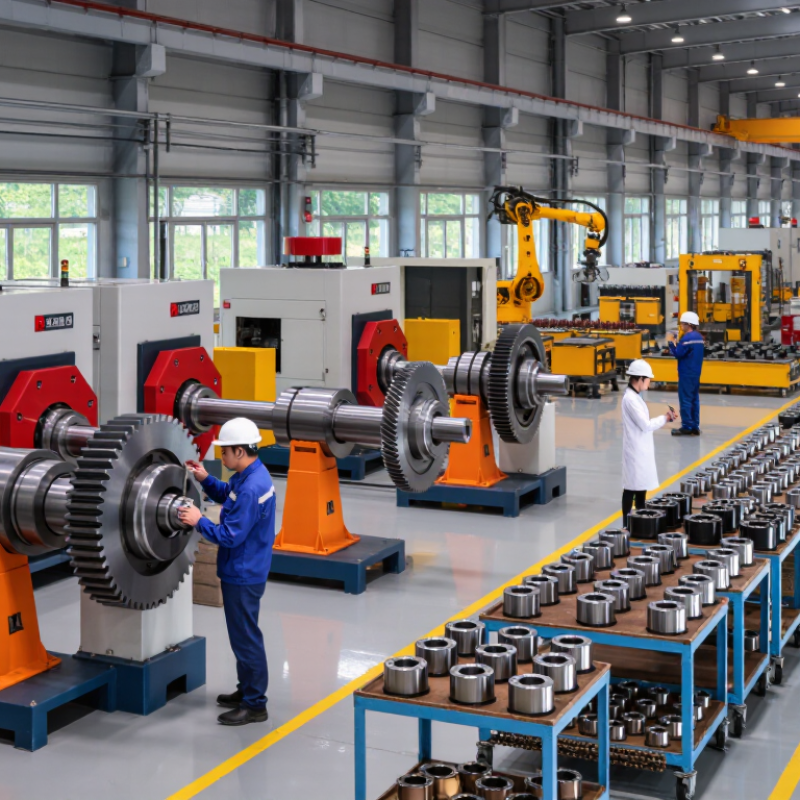
China Top Power Transmission Parts Manufacturers?

What Power Transmission Parts Include and How They Are Used

China Top Power Transmission Parts Manufacturers?

Power transmission parts move mechanical power from a motor to a working machine. Common components include gears, shafts, couplings, belts, pulleys, chains, sprockets, and bearings. Each part has a specific job. Gears change speed and torque, while shafts carry rotation through aligned supports. Couplings connect shafts and absorb small alignment errors. Belts and chains transfer motion between separated shafts.

The correct selection depends on torque, speed, load direction, operating temperature, and working environment. A conveyor may use sprockets and chains for steady movement. A packaging machine may need timing belts for accurate positioning. Industrial gear systems often require controlled tooth profiles, suitable hardness, and precise surface finishing. Small details matter.

Not only size.

During supplier evaluation, engineers should check material certificates, dimensional tolerances, heat-treatment records, and inspection methods. A part can look perfect but fail under repeated shock loads. In practice, lubrication is often underestimated. Dust, moisture, or poor tension can shorten service life quickly.

I have also seen designs that focused on maximum strength but ignored maintenance access. That choice created unnecessary downtime. Reliable manufacturers should provide clear drawings, traceable inspection data, and practical guidance for installation and replacement. One weak assumption can affect the entire transmission system.

How China’s Power Transmission Manufacturing Industry Is Organized

China’s power transmission manufacturing industry is not one factory. It is a layered network of material suppliers, foundries, forging plants, machining workshops, heat-treatment facilities, assemblers, and technical distributors. This structure supports products such as gears, shafts, couplings, bearings, chains, and industrial drive units. The China Machinery General Components Industry Association reports continued demand for precision components, automation equipment, and energy-saving drive systems. However, supplier capabilities vary sharply. Some factories control steel sourcing and heat treatment. Others mainly perform CNC machining or final assembly.

Demand is also shaped by China’s expanding electricity infrastructure. According to the China Electricity Council’s 2024 statistical report, national power-generation capacity reached about 2.92 billion kilowatts by the end of 2023. Renewable capacity exceeded half of that total. Wind, solar, grid upgrades, and factory automation create steady demand for reliable transmission parts. The National Bureau of Statistics also reported manufacturing value added above 31 trillion yuan in 2023, showing the industrial depth behind this supply chain. It is a large base.

In practice, buyers should evaluate traceability, gear accuracy, material certificates, fatigue testing, and delivery consistency. ISO-based quality systems help, but certificates alone prove little. A supplier may pass dimensional inspection while missing long-term lubrication or vibration requirements. That is the uncomfortable part. China’s production network is efficient, yet uneven. Regional specialization, subcontracting, and price pressure can complicate accountability. Independent testing and sample validation remain essential before large-volume purchasing.

China Top Power Transmission Parts Manufacturers? - How China’s Power Transmission Manufacturing Industry Is Organized

Scope: This overview covers mechanical power-transmission components used to transfer motion and torque in machinery. It does not describe high-voltage grid transmission equipment. The categories below explain common industry roles and are not a company ranking.

Industry Segment Typical Products Common Manufacturing Processes Typical Applications Role in the Supply Chain Useful Sourcing Checks
Gears and gear components Spur, helical, bevel and worm gears; gear shafts and precision gear sets Gear cutting, hobbing or shaping; heat treatment; grinding and dimensional inspection Industrial machinery, material-handling equipment, vehicles and automation systems Supplies individual transmission elements or parts made to a customer’s drawing and performance requirements Tooth accuracy, material and heat-treatment specifications, noise requirements, inspection records and traceability
Gearboxes and speed reducers Worm, helical, bevel and planetary reducers; enclosed gear drives Gear and housing production, machining, assembly, lubrication filling and operational testing Conveyors, packaging machinery, pumps, mixers and factory equipment Integrates gears, shafts, bearings, seals and housings into a drive unit Rated torque and ratio, duty cycle, mounting dimensions, backlash, lubrication and test conditions
Bearings and bearing units Ball and roller bearings, mounted units, bearing housings and related components Ring forming and machining, raceway grinding, heat treatment, assembly and cleanliness control Motors, gearboxes, agricultural machinery, fans and general industrial equipment Supports rotating shafts and helps manage friction and radial or axial loads Dimensions and tolerances, load and speed ratings, sealing, lubrication, materials and application fit
Chain drives and sprockets Roller chains, conveyor chains, attachment chains and matching sprockets Link forming, pin and bushing production, heat treatment, sprocket machining and assembly Conveyors, agricultural machinery, production lines and selected power-drive applications Provides a positive mechanical drive or conveying connection between rotating or moving parts Chain pitch and series, working load, operating environment, lubrication needs and sprocket compatibility
Belt drives and pulleys V-belts, synchronous belts, flat belts, timing pulleys and belt tensioning components Elastomer compounding and belt forming; pulley casting, machining or fabrication; finishing and inspection Fans, compressors, machine tools, pumps and light-to-medium industrial drives Transfers power through friction or belt teeth and can accommodate spacing between shafts Belt profile and length, pulley dimensions, speed and torque, temperature limits and alignment requirements
Shaft couplings and torque-control parts Flexible, rigid and jaw couplings; universal joints; torque limiters Turning, milling, broaching, balancing, surface treatment and assembly Connecting motors, gearboxes, pumps and driven machinery Joins rotating shafts and, depending on design, accommodates misalignment or limits transmitted torque Shaft bore and keyway dimensions, allowable misalignment, speed, torque, balance and environmental conditions
Materials, castings and precision-machined parts Gear blanks, housings, shafts, brackets and custom-machined transmission components Metal casting or forging, CNC machining, heat treatment, coating and dimensional inspection Used by component producers and equipment manufacturers across multiple industries Acts as an upstream supplier of material forms and components for finished transmission products Material grade, casting or forging quality, machining tolerances, surface finish and process documentation
Integrated drive and custom assembly suppliers Configured drive assemblies combining motors, reducers, couplings and related parts Component selection, engineering, assembly, alignment and application-specific testing Production lines, automated equipment and machinery projects with defined operating requirements Coordinates multiple component categories into a drive solution; may source some parts from specialist suppliers Interface drawings, duty profile, efficiency and service requirements, compatibility, acceptance tests and after-sales support

Key Products Made by Leading Chinese Manufacturers

China’s power-transmission manufacturers produce conductors, insulators, fittings, tower components, and protection equipment. Their products serve different voltage levels and climates. Aluminum alloy conductors carry current across long spans, while composite or porcelain insulators support live conductors and resist electrical stress. Suspension clamps, connectors, and vibration dampers help secure lines against wind and mechanical movement. Small parts matter.

The International Energy Agency’s Electricity Grids and Secure Energy Transitions report (2023) estimates that more than 80 million kilometres of electricity grids must be added or refurbished by 2040 to meet climate goals. That scale makes product consistency important. Buyers should review conductor resistance, tensile strength, corrosion protection, and insulator performance—not just catalogue dimensions. Factory test records and traceable material specifications offer useful evidence, though paperwork alone cannot prove field performance. I may be overlooking local operating conditions; coastal salt, dust, and ice can change product needs considerably.

Tips: Match fittings to the conductor’s actual diameter and loading. Request test reports for the relevant voltage class, plus coating and material details. For a tower project, check that steel thickness, hole positions, and galvanizing requirements match approved drawings. A sample inspection can catch a problem early.

How to Compare Manufacturers by Quality, Capacity, and Certification

China’s power transmission parts manufacturers should be compared on evidence, not polished catalogues. Quality starts with the part itself: inspect dimensions, welds, galvanizing, and surface finish against the drawing and specified requirements. Ask for material certificates, inspection records, and test reports tied to actual production batches. A neat sample helps. Traceability matters more.

Capacity is not just a factory’s stated monthly output. Check the equipment, staffing, and production schedule behind that figure. Ask how the supplier handles peak orders, tooling changes, and rejected parts. A realistic lead time may be more useful than a large number on a quotation. If possible, compare recent delivery records with the proposed schedule. Small mismatches can become expensive delays.

Certifications should match the product, process, and market requirements; a certificate alone does not prove consistent workmanship. Confirm its issuing body, validity, and scope, then compare it with the factory’s documented quality controls. A site visit or independent inspection can reveal whether procedures are followed on the shop floor. I would not judge a manufacturer from one audit or one good shipment. That is imperfect, but production consistency takes time to verify. Keep the comparison grounded in measurable criteria: defect rates, delivery performance, inspection results, and clear responses to technical questions.

Factors to Consider When Selecting a Chinese Supplier

China’s power transmission market is expanding with grid demand. The International Energy Agency’s Electricity 2024 report forecasts global electricity demand to grow 3.4% annually through 2026. This growth makes supplier selection more demanding, not easier.

Check whether the Chinese supplier manufactures critical parts or simply resells them. Ask for material certificates, dimensional reports, tensile-test results, and batch traceability. For insulators, clamps, connectors, and fittings, confirm compliance with relevant IEC standards. A factory audit should review CNC equipment, inspection tools, heat-treatment records, and corrective-action procedures. The World Bank’s Logistics Performance Index 2023 placed China 19th globally, with a score of 3.7. Logistics are capable, but port schedules and export documentation still need verification. A low quote can still be expensive. One overlooked tolerance may create installation delays.

Tips: Request a pilot order before signing a long contract. Compare samples under identical test conditions. Confirm packaging for corrosion protection and vibration. Ask for realistic lead times, not optimistic promises. Include inspection rights, warranty terms, replacement procedures, and approved tolerances in the contract. Supplier websites can look professional, but evidence matters more. This is where buyers often misjudge. A transparent supplier should explain failures, not hide them. Third-party testing adds cost, yet it may prevent a much larger field failure.

China Top Power Transmission Parts Manufacturers: Supplier Selection Factors

Suggested evaluation weighting for comparing Chinese suppliers of gears, couplings, bearings, belts, and chain-drive components

Quality control and product verification should receive the highest priority because power transmission parts must meet dimensional, material, and performance requirements. Production capacity, delivery reliability, export compliance, and after-sales support should also be assessed before selecting a supplier. The percentages represent a neutral procurement scoring framework rather than data from any individual company.