
R&D Ergo new logo

ERGONOMIC SOLUTIONS FOR OVER 25 YEARS.

To serve you better | Now merging service and customer support with our sister company Liftsafe Engineering and Service Group.

How to Choose the Best Vacuum Lifters for Your Business?

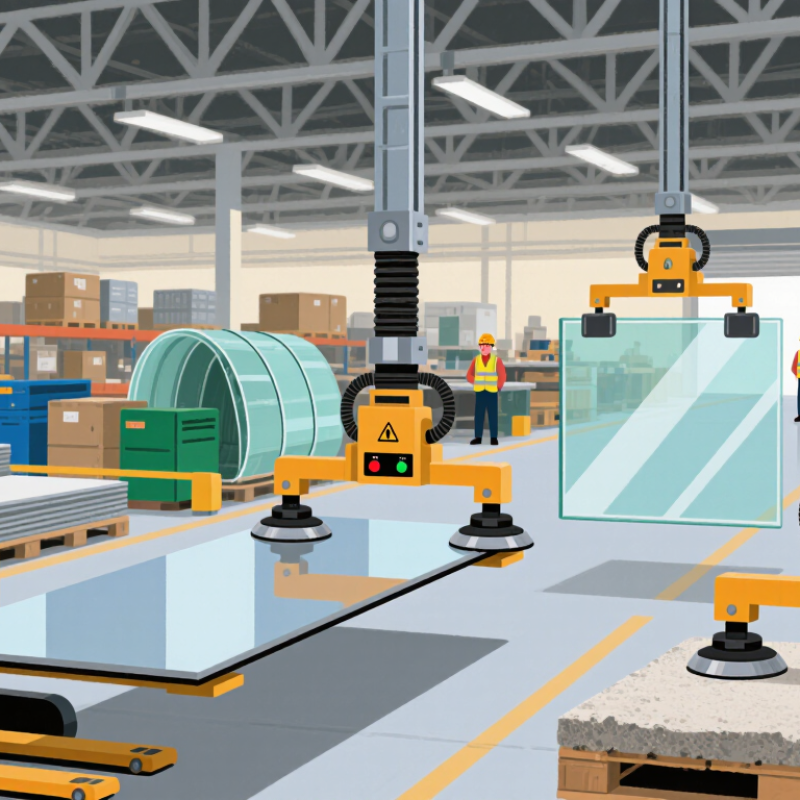
Choosing the right Vacuum Lifters can transform a busy warehouse, fabrication shop, or glass installation site. The wrong choice can create delays, damaged materials, and unnecessary operator fatigue. A reliable decision begins with the load, not the lifting device.

Vacuum technology expert Dr. Karl Jousten explains the core principle: “A vacuum is created by a pressure difference, not by suction alone.” That pressure difference must remain stable during every lift. Buyers should examine load weight, surface texture, porosity, temperature, dimensions, and lifting frequency. A smooth steel sheet behaves differently from a dusty concrete panel or a slightly curved glass plate. Small details matter.

Safety comes first.

Check the rated capacity under real working conditions. Consider uneven surfaces, side loading, wind, battery condition, and possible air leakage. Ask whether the Vacuum Lifters provide visual alarms, backup power, automatic re-pumping, and ergonomic controls. Documentation and operator training also deserve attention. They are easy to overlook.

Purchase price alone can mislead. A cheaper unit may require more maintenance or slow production. A premium model may reduce handling time and protect valuable materials. Still, no machine suits every business. That is where careful testing becomes valuable. Request a practical demonstration using your actual products, not a perfect sample in a showroom.

The strongest choice combines verified performance, service support, and honest risk assessment. Some decisions will remain imperfect. However, measuring the real workflow makes those imperfections visible before they become expensive problems.
How to Choose the Best Vacuum Lifters for Your Business?

Define Your Business’s Vacuum Lifting Requirements

Choosing the best vacuum lifter starts with a precise definition of your business’s lifting requirements. Record the heaviest load, not the average one. Measure its length, width, thickness, and center of gravity. Note whether operators lift sheets horizontally, vertically, or from awkward positions. These details affect capacity, pad arrangement, and control design.

Surface condition matters just as much. Smooth, non-porous materials usually create a stronger seal than rough, dusty, oily, or textured surfaces. Glass, metal, stone, plastic, and coated panels may require different vacuum pads. Check the load’s temperature and flexibility, too. A thin panel can bend under pressure, even when its weight seems manageable. Do not rely on the catalog capacity alone. It may not reflect your actual working conditions.

Map the complete workflow around the lift. How many cycles occur per hour? How far must the load travel? Will the equipment operate indoors, outdoors, or near moisture and dust? Specify the available power supply, operator controls, storage space, and required lifting height. Include safety features such as vacuum indicators, reserve capacity, and controlled release functions. A trial with representative loads is valuable. In practical assessments, the first requirement list is often incomplete. A small oversight, such as a curved surface or limited aisle width, can change the suitable configuration. Test carefully, record the results, and revise the plan before purchase.

How to Choose the Best Vacuum Lifters for Your Business?

Define Your Business’s Vacuum Lifting Requirements

Pad diameter directly affects lifting capacity. The estimates below assume a 60 kPa vacuum differential, a level sealed surface, and a safety factor of 2. Actual capacity can be lower because of surface texture, leakage, material flexibility, seal condition, acceleration, and environmental conditions. Select a lifter based on the heaviest load, surface characteristics, lifting orientation, and required safety margin.

Compare Vacuum Lifter Types and Their Working Principles

Choosing a vacuum lifter starts with understanding how it creates and maintains suction. Different designs suit different materials, weights, and working environments.

Pneumatic vacuum lifters use compressed air to create negative pressure through a venturi system. They respond quickly and work well in production areas with reliable air supplies. Electric vacuum lifters use a motor-driven pump. They offer steady suction and are practical where compressed air is unavailable. Battery-powered models improve mobility, especially on construction sites or in warehouses. Manual lifters use a hand-operated pump or lever. They are simpler, but operators must monitor pressure more closely.

Surface condition matters as much as lifting capacity. Smooth glass, coated metal, and polished stone usually form strong seals. Rough timber, textured panels, or dusty sheets may leak air. A larger sealing pad can help, although it cannot fix every surface problem. I have seen operators choose a lifter by maximum load alone. That approach can fail when the material flexes or contains small gaps.

Check the pump type, reserve capacity, alarm system, and release mechanism. A vacuum gauge should remain visible during handling. Some systems include automatic re-pumping when pressure drops. That feature adds protection, but it does not replace inspection. Test the seal before lifting. Keep the load close to the rated limit only when conditions are stable. The best choice may be less powerful, but easier to control.

Evaluate Capacity, Safety Features, and Handling Performance

Choosing the best vacuum lifter starts with capacity, but the largest rating is not always the safest choice. Match the lifter to the material, dimensions, surface condition, and load center. A glass panel may weigh less than a stone slab, yet its smooth surface can demand stronger, more consistent suction. Leave a practical safety margin instead of operating near the maximum limit. During equipment evaluations, I check the actual load path, not only the number on the specification sheet.

Safety features deserve close inspection. Look for vacuum gauges that remain visible from the operator’s position, audible warning alarms, non-return valves, and backup vacuum reservoirs. Automatic shutoff protection can reduce risk when power fails. However, these features cannot replace pre-use inspections. Check seals for cracks, hoses for wear, and contact pads for dirt. A small leak may become serious during a long lift.

Handling performance affects both productivity and control. Test how smoothly the lifter starts, stops, tilts, and rotates with a realistic load. Controls should respond predictably, even when gloves are worn. Compact designs help in narrow workshops, while balanced frames reduce swinging during placement. I have found that a slightly slower lifter can be better than a fast, unstable model. That judgment is not always obvious. Ask operators to perform repeated trial lifts, record awkward movements, and reconsider the choice before regular production begins.

Match Power Sources and Controls to Your Work Environment

Choosing the best vacuum lifter starts with the work environment, not the maximum lifting capacity. Power sources must match daily conditions.

Electric lifters suit stable indoor production lines with accessible outlets. Battery models offer mobility across loading bays, but charging discipline matters. Pneumatic systems can perform well in dusty areas, provided the air supply remains clean and reliable. Moisture changes the decision. So does temperature.

Control design deserves equal attention. Operators should see vacuum levels clearly and access controls without releasing the load. Audible and visual warnings can reveal pressure loss before a panel shifts. A reserve tank or automatic re-pumping system adds protection, but it cannot replace inspection.

The U.S. Bureau of Labor Statistics recorded 5,283 fatal work injuries in 2023 (Census of Fatal Occupational Injuries, 2023). This figure is not specific to vacuum lifting, yet it reinforces the cost of weak control systems. HSE reported 477,000 workers with work-related musculoskeletal disorders in Great Britain during 2022/23, with 6.6 million working days lost (Work-related ill health and injury statistics, 2023). Reducing awkward manual handling remains practical risk control.

Test the lifter on the actual route. Check glare, gloves, noise, dust, and emergency access. A specification sheet misses these details. That assumption can fail.

Do not oversize every component. Excess capacity may increase weight and reduce handling precision. A short trial with real loads often exposes the better configuration. Even experienced teams sometimes choose convenience over resilience. That choice deserves another review.

How to Choose the Best Vacuum Lifters for Your Business? - Match Power Sources and Controls to Your Work Environment

Vacuum Lifter Type Typical Power Source Recommended Control System Typical Working Capacity Best-Suited Work Environment Operational Advantages Key Limitations and Safety Considerations
Electric Vacuum Lifter Single-phase or three-phase mains electricity; commonly 110–240 V for portable units Push-button pendant, wired remote, vacuum gauge, audible alarm, and automatic pump control Approximately 100–2,000 kg, depending on the number and size of suction pads Indoor production lines, warehouses, glass handling, steel service centers, and repetitive lifting stations Stable vacuum generation, high duty cycle, consistent lifting performance, and low operator effort Requires a reliable electrical supply and protected cables; outdoor use may require weather-resistant equipment and ground-fault protection
Battery-Powered Vacuum Lifter Rechargeable battery, commonly 12 V or 24 V systems Handheld or pendant controls, battery-status indicator, vacuum gauge, and low-vacuum warning alarm Approximately 100–1,500 kg, subject to battery capacity and pad configuration Construction sites, loading areas, outdoor work, mobile installation teams, and locations without mains power High mobility, no trailing power cable, rapid deployment, and suitability for remote work areas Operating time is limited by battery capacity, load, temperature, and pump duty cycle; batteries require scheduled charging and replacement planning
Pneumatic Vacuum Lifter Compressed-air supply, typically around 5–7 bar, with suitable flow capacity Air valve controls, vacuum regulator, vacuum switch, gauge, and automatic shutoff or alarm Approximately 100–3,000 kg, depending on air flow, pad area, and material surface Factories with an existing compressed-air network, heavy manufacturing, foundries, and high-cycle production Good suitability for hazardous or wet areas, strong continuous-duty capability, and no electrical motor at the lifting point Performance depends on clean, dry, adequately sized compressed air; air consumption and compressor noise should be included in operating costs
Venturi Vacuum Lifter Compressed air passed through a Venturi generator; commonly supplied at approximately 5–6 bar Manual air valve, vacuum gauge, check valve, and low-vacuum alarm where required Approximately 50–1,000 kg for common industrial configurations Short-cycle handling, clean manufacturing areas, fabrication shops, and applications requiring a compact vacuum generator Compact design, rapid vacuum generation, limited moving parts, and easy integration with pneumatic equipment Can consume significant compressed air; vacuum may drop quickly if the surface leaks or the air supply is interrupted
Manual Vacuum Lifter Hand-operated pump or lever; no external electricity or compressed air required Manual pump handle, mechanical vacuum indicator, vacuum gauge, and mechanical release valve Approximately 20–300 kg, depending on design, pad size, and surface quality Low-volume work, maintenance tasks, small workshops, service operations, and temporary lifting points Simple setup, low purchase cost, easy portability, and independence from facility utilities Requires operator pumping and frequent vacuum checks; generally unsuitable for high-cycle production or unattended lifting
Vacuum Tube Lifter Electric vacuum pump, commonly connected to a fixed lifting column or overhead rail Ergonomic grip tube, fingertip lift-and-lower controls, vacuum indicator, and automatic load compensation Approximately 10–300 kg, depending on tube diameter and configuration Carton handling, bag handling, packaging lines, order picking, and frequent ergonomic lifting Fast repetitive handling, reduced operator strain, precise positioning, and efficient one-person operation Best performance requires porous-load compensation and correctly sized pads; lifting height and reach are limited by the rail or column layout
High-Cycle Automatic Vacuum Lifter Electric or pneumatic power with redundant vacuum circuits and automatic controls PLC interface, remote pendant, dual vacuum sensors, automatic pad switching, alarms, and emergency stop Approximately 500–5,000 kg or more for engineered systems Automated production lines, steel plate processing, precast components, and continuous material-flow operations Supports automation, repeatable positioning, high throughput, and integration with cranes or robotic equipment Requires engineering validation, preventive maintenance, redundancy testing, and correctly designed fail-safe controls

Selection figures are typical industrial ranges rather than universal ratings. Final capacity must be confirmed from the equipment’s rated load, vacuum level, suction-pad area, load geometry, surface condition, temperature, lifting orientation, and applicable workplace safety requirements.

Assess Maintenance Needs, Compliance, and Total Ownership Cost

Choosing a vacuum lifter should begin with maintenance, compliance, and total ownership cost.

Purchase price alone can mislead. A low-cost unit may require frequent seal replacement, battery servicing, or specialist inspections. During site assessments, I check lifting cycles, surface conditions, and daily cleaning habits. Small details matter. Dusty workshops can shorten filter life. Rough storage can damage hoses and pads.

Ask for a clear maintenance schedule before purchasing. It should identify inspection intervals, replacement parts, testing methods, and trained personnel. Keep records of load tests, repairs, and operator training.

These records support reliable decisions and may help demonstrate compliance with workplace safety requirements. Confirm that the equipment suits your local regulations, rated capacity, and lifting environment. Do not rely on a sales specification alone. Review the operating manual and available technical documentation.

Total ownership cost includes energy, downtime, spare parts, inspections, training, and disposal. Estimate these costs over the expected service life. A simple worksheet can compare several models fairly. Include lost production when a lifter is unavailable. That cost is often overlooked. No inspection plan is perfect. Real usage changes. Recheck your assumptions after the first few months, especially if operators report slower lifting, unusual noise, or reduced holding time. A dependable choice is not always the newest or cheapest option. It is the lifter that remains safe, supportable, and economical under your actual working conditions.