
R&D Ergo new logo

ERGONOMIC SOLUTIONS FOR OVER 25 YEARS.

To serve you better | Now merging service and customer support with our sister company Liftsafe Engineering and Service Group.

How to Choose Hoist Lifting Equipment in 2026?

Choosing Hoist Lifting Equipment in 2026 starts with the real lifting task, not a catalogue photo. A compact electric chain hoist may suit a workshop with frequent, repeated lifts. A manual model may be more practical where power is unavailable and use is occasional. The right choice depends on load weight, lift height, operating frequency, available power, and the surrounding environment.

Look beyond rated capacity. Check the hoist’s duty classification, lifting speed, control type, and compatibility with the beam or trolley. Picture the job: a steel component hanging above a production line, or a pallet moving through a dusty warehouse. Heat, moisture, limited headroom, and tight travel paths can change what works. Small details matter.

Safety and maintenance deserve equal attention. Review the manufacturer’s specifications, operating instructions, inspection requirements, and spare-parts support. Ask a qualified supplier or lifting professional to confirm that the selected configuration suits the application. A rule of thumb can narrow the options, but it can also mislead; actual operating conditions matter more than a simple capacity match. Don’t guess. This guide explores the key questions to ask before purchasing, from evaluating load demands to comparing hoist types and planning long-term care. No single model fits every workplace. A careful selection process can help reduce avoidable downtime and support safer, more consistent lifting.
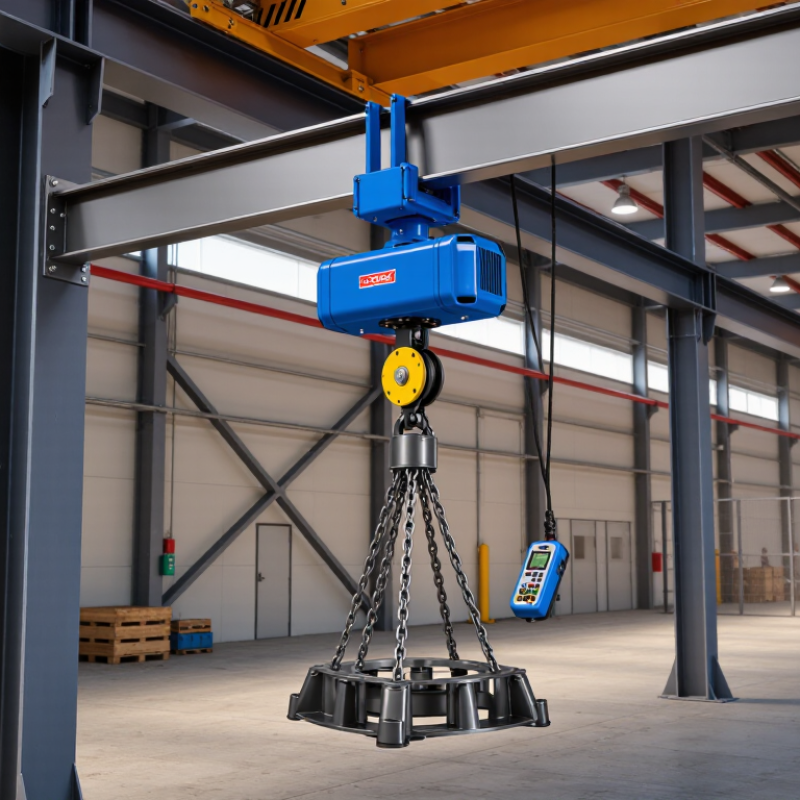
How to Choose Hoist Lifting Equipment in 2026?

Define the Load Requirements and Lifting Task

Before selecting hoist lifting equipment, define the load precisely. Record its total weight, including slings, hooks, spreader beams, and other attachments. Check the nameplate or manufacturer’s documentation rather than relying on a visual estimate. Close enough is not enough.

Weight is only part of the task. Note the lift height, travel distance, available headroom, and how often the hoist will operate. Consider the load’s shape and center of gravity. A long, uneven machine may swing or tilt, even when its weight is within capacity. Map the lifting path, including tight corners and nearby obstructions. Small details matter.

Describe the actual working conditions. Dust, moisture, heat, and limited access can affect equipment choice and maintenance needs. Also consider how the load will start, stop, and settle; sudden movement can increase forces on the lifting system. A common planning mistake is to specify capacity from the load alone. Include every lifting accessory, and verify that each component is rated for the intended arrangement. If information is uncertain, pause and confirm it with a qualified lifting professional. Even a careful estimate can be wrong. Recheck the measurements before ordering.

How to Choose Hoist Lifting Equipment in 2026? — Define the Load Requirements and Lifting Task
Lifting Task Load to Be Lifted Lift Height Use Pattern Operating Environment Hoist Type to Evaluate Key Selection Checks
Occasional maintenance lifts in a small workshop Up to 250 kg, including the lifting attachment and rigging 2–4 m Infrequent lifts; short operating periods Indoor, dry, clean area Manual chain hoist, with a rated capacity above the total suspended load Confirm support structure capacity, headroom, chain travel, hook clearance, and that the load can be positioned safely by hand.
Regular handling of components at a fixed workstation About 500 kg per lift, including slings and other below-hook equipment 3–6 m Repeated lifts during a shift Indoor production area Electric chain hoist on a suitably rated trolley or fixed suspension Check expected starts and lifts per hour, travel speed, control arrangement, power supply, braking, and the support beam or runway rating.
Moving heavy machinery or assemblies across a workshop bay About 2,000 kg total suspended load 4–8 m Frequent use; loads move horizontally as well as vertically Indoor industrial area Electric chain or wire-rope hoist with a compatible powered or manual trolley Verify rated capacity, duty rating, trolley and runway compatibility, end stops, lift and traverse speeds, and clearance along the full travel path.
Loading equipment at an outdoor service area About 1,000 kg, including lifting gear 3–5 m Intermittent lifts with periods of inactivity Outdoor; exposed to rain, dust, or temperature variation Electric hoist configured for the site conditions, or a manual hoist where power is unavailable Check the specified environmental protection, corrosion resistance, temperature limits, electrical supply, and protection against wind or water exposure.
Frequent production lifting on a crane runway About 5,000 kg total suspended load 6–12 m High-frequency operation over multiple shifts Indoor production facility Electric wire-rope hoist or another engineered system selected for the required duty Have a qualified designer assess load spectrum, operating cycles, lift speed, reeving, braking, crane structure, power supply, and maintenance access.
Precise positioning of a fragile or alignment-sensitive load About 300 kg, including the lifting attachment 2–4 m Occasional lifts requiring controlled, gradual movement Indoor, controlled area Hoist with suitable low-speed or variable-speed control, selected for the load and task Assess stopping accuracy, smooth starting, pendant or remote-control access, load stability, and whether a separate positioning device is required.
Preliminary selection guide: determine the total suspended load, including rigging and attachments, before choosing equipment. The hoist, trolley, support structure, and lifting accessories must each be suitable for the task and have appropriate rated capacities. Final selection should be checked against applicable regulations, standards, manufacturer specifications, and a competent person’s assessment.

Assess the Workspace, Duty Cycle, and Power Supply

How to Choose Hoist Lifting Equipment in 2026?

Assess the workspace before comparing lifting capacity. Measure ceiling height, beam width, aisle clearance, and the full load path. A 4.5-meter ceiling may leave little room for a long sling and hook assembly. Check nearby pipes, sprinklers, doors, and pedestrian routes. The floor must support the hoist, trolley, and moving load. Do not rely on drawings alone. A site visit often reveals awkward corners or hidden obstructions.

Duty cycle affects performance more than occasional peak load. Record load weights, lifting frequency, travel distance, and operating hours. A hoist moving 500 kilograms ten times daily faces different stress from one moving it hourly. Repeated starts create heat in motors and brakes. Select a duty rating that matches real use, not an optimistic estimate. I have seen planning fail when teams focused only on maximum capacity. That mistake deserves review.

Power supply can limit an otherwise suitable installation. Confirm voltage, phase, frequency, outlet location, and cable length with a qualified electrician. Long cables may cause voltage drop, while unstable supplies can affect controls and braking. Check whether the workspace needs pendant, remote, or fixed controls. Keep emergency stops accessible. Follow local electrical requirements and the equipment’s technical documentation. Leave room for inspection access; cramped maintenance points become neglected very quickly.

Choose a Hoist Type and Lifting Configuration

Choosing a hoist in 2026 starts with the load path, not the catalogue. Define the rated load, lift height, duty cycle, travel distance, and available power. A chain hoist suits compact, intermittent lifting. A wire-rope hoist usually fits higher lifts and frequent cycles. For repetitive production, an electric hoist reduces operator effort. Manual equipment still works for occasional maintenance, but speed and fatigue become hidden costs.

Configuration matters just as much. A single-fall arrangement offers greater lifting speed, while reeving more falls increases mechanical advantage. Check headroom carefully. A low-clearance trolley can preserve valuable building height. For fixed points, verify beam capacity, deflection, end stops, and anchor geometry. The 2024 MHI Industry Report identified labor availability as a continuing material-handling challenge, supporting designs that reduce manual handling and simplify controls. Yet automation is not automatically safer.

Market data also shows why selection deserves discipline. Grand View Research estimates the global hoist market will continue expanding through the decade, driven by construction, manufacturing, and infrastructure demand. More installations mean more mismatched equipment. I have seen projects choose capacity from the heaviest item alone. That approach misses impact loading, side pulls, starts, stops, and uneven sling angles. A 10-ton hoist may be unsuitable for a 10-ton load if the configuration creates shock loading. Review duty classification, inspection access, emergency stopping, and operator visibility against applicable standards. The spreadsheet may look complete. It may still be wrong.

Match Capacity, Lift Height, Speed, and Controls

Choosing hoist lifting equipment in 2026 starts with the load, not the catalog image. Record the heaviest routine load, occasional peak load, and load shape. A 2,000-kilogram machine may need more capacity when slings, spreader beams, and impact forces are included. Do not select capacity by guessing. Review the manual, duty rating, and inspection history with a qualified lifting professional. Capacity should leave a sensible margin, but excessive capacity can reduce portability and increase cost. It is easy to overbuy.

Lift height changes the practical choice. Measure the floor-to-highest landing distance, then account for hook loss, headroom, beam clearance, and below-hook devices. A low-headroom hoist may fit beneath a crowded roof, while a longer chain or rope may slow handling and create storage problems. Speed must match the work. Fast lifting helps repetitive production, but controlled movement suits fragile parts and tight clearances. Variable speed can help, though it adds control complexity and training needs. Real floors are rarely as level as drawings suggest.

Controls should feel clear when operators wear gloves and stand away from the load. Pendant, wireless, and fixed controls affect visibility, signal reliability, and emergency response. Test stopping distance, brake behavior, and limit functions before regular use. Ask installers to demonstrate a loaded trial, not only an empty run. Keep records of tests, maintenance, and operator training. I have seen teams focus on lifting speed while ignoring control reach. That mistake becomes obvious near a doorway. Recheck the choice after the first month; actual workflow may expose assumptions that looked reasonable on paper.

Check Safety Features, Standards, and Service Support

How to Choose Hoist Lifting Equipment in 2026?

A safe hoist starts with visible, testable protection. Check the overload limiter, upper and lower limit switches, emergency stop, and automatic brake. The control pendant should feel firm and respond without delay. Inspect the hook latch, chain or wire rope, guards, and warning labels before comparing lifting capacity. A higher rated hoist is not automatically safer if the supporting structure is weak.

Standards offer useful discipline, but certificates need careful reading. Confirm the equipment matches applicable local regulations and recognized requirements, such as ASME B30.16 or EN 14492-2 where relevant. Check the rated load, duty class, inspection method, and test records. The documentation should identify the exact model and configuration. A generic certificate is a warning sign. Site conditions matter too. Dust, moisture, heat, and frequent starts can change the correct selection.

Service support often decides whether a hoist remains safe after installation. Ask how quickly trained technicians can respond, which spare parts are stocked, and whether inspection records are easy to maintain. Good suppliers provide manuals, operator training, maintenance schedules, and clear escalation channels. I have found that a polished sales presentation means little when replacement parts arrive late. A practical trial can expose weak controls or awkward maintenance access. Do not skip it. Even experienced teams can overlook small problems during a rushed purchase.