

China Top 10 Asparagus Optical Sorter Manufacturers?
China’s asparagus industry has become a major testing ground for intelligent food-processing equipment. FAOSTAT’s Crops and Livestock Products database consistently identifies China as the world’s leading asparagus producer, although annual figures vary by reporting year. That scale creates pressure for cleaner grading, faster throughput, and lower product loss. An Asparagus Optical Sorter can inspect spears by color, diameter, curvature, and visible defects. Cameras capture each spear under controlled lighting. Air jets then remove unsuitable pieces within milliseconds.
This article introduces ten notable Chinese manufacturers connected with asparagus optical sorting equipment. The selection considers machine design, sorting accuracy, processing capacity, after-sales support, export experience, and documented customer applications. These criteria reflect practical concerns reported across food-processing projects, not merely factory size. Research from Grand View Research and MarketsandMarkets describes optical sorting as a growing segment, driven by automation, labor shortages, stricter quality expectations, and demand for traceable food production. Those reports provide useful market direction, but their estimates differ. Readers should verify specifications directly with each supplier.
In a real packing house, wet asparagus can reflect light unevenly. Mud may resemble a defect. A broken tip may escape detection. These details matter more than impressive brochures. Supplier claims should therefore be tested with representative samples, including thin spears, purple varieties, and damaged products. Performance can change after installation. This guide aims to support a careful comparison rather than declare one universal winner. Manufacturing capability, software quality, local service, and operator training still require independent verification before purchase.
What Is an Asparagus Optical Sorter?
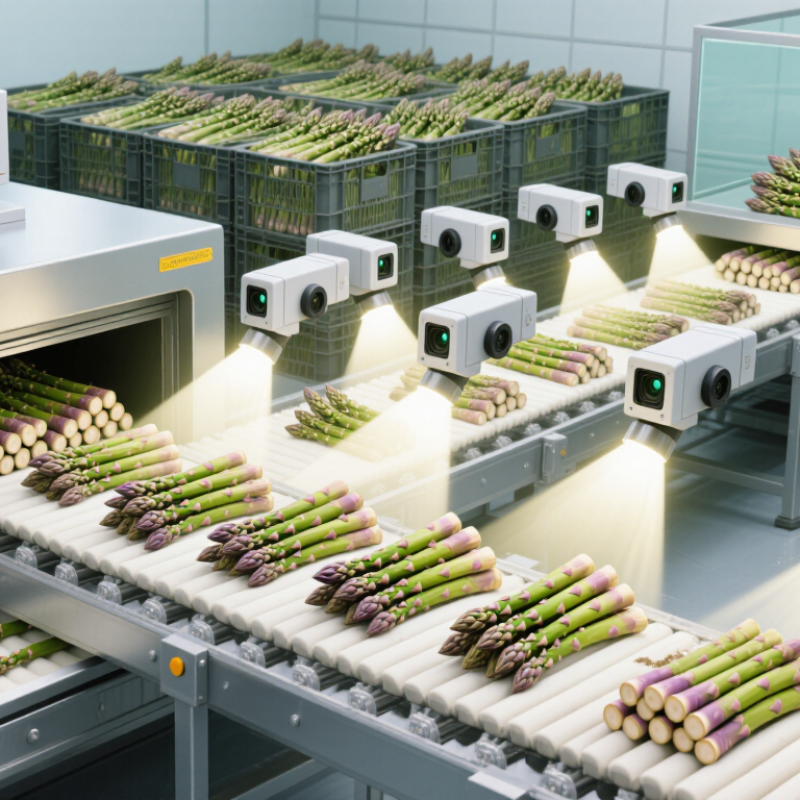
An asparagus optical sorter is an automated inspection system for grading spears by color, size, shape, and visible defects. It combines cameras, controlled lighting, software, and air ejectors. It is not a camera alone. The machine scans each spear while it travels on belts or rollers, then removes damaged, discolored, woody, or misshapen pieces within milliseconds.
FAOSTAT crop data indicate that global asparagus production exceeded 8 million tonnes in recent years, with China supplying the largest share. This scale increases pressure on processors to reduce manual inspection and maintain consistent grades. In a practical line, multispectral cameras can detect brown tips, bruises, soil marks, and uneven green color. Near-infrared sensors may identify internal moisture differences, although performance depends on calibration and product variety. Conveyor speed, spacing, and lighting stability also affect accuracy.
No sorter is perfect. A pale tip may pass unnoticed, while a harmless surface mark may trigger rejection. The system must therefore match local cultivar traits, moisture conditions, and export specifications. Reports from MarketsandMarkets describe steady growth in automated food-sorting equipment, driven by labor shortages, traceability demands, and lower waste targets. However, installation cost, cleaning routines, and operator training remain important concerns. A reliable evaluation should compare detection accuracy, product loss, throughput, and maintenance records rather than relying on impressive specifications alone.
How Optical Sorting Improves Asparagus Processing
Optical sorting is changing how asparagus processors evaluate speed, cleanliness, and product consistency. In China, leading manufacturers are developing systems for different harvest conditions and factory layouts. Their equipment typically uses cameras, controlled lighting, and software to inspect each spear while it moves along a conveyor.
The system can identify dark tips, bruises, broken ends, foreign material, and uneven color. Good spears continue forward. Defective pieces are removed by short air bursts. This reduces manual inspection pressure, especially during peak harvest periods. A worker may watch the monitor while checking samples beside the line. That human check still matters.
Size grading also becomes more precise. Spears can be separated by diameter and length before trimming or packing. This helps reduce mixed cartons and improves cutting accuracy. However, optical sorting is not magic. Wet surfaces, soil residue, curled spears, and overlapping products can confuse the camera. Poor lighting creates problems too. Regular cleaning and calibration are essential.
A practical installation should begin with real asparagus samples, not only factory test images. Processors should measure rejection accuracy, product loss, belt speed, and maintenance time. The fastest machine may not deliver the best result. A slower setting can protect tender tips and reduce unnecessary waste. Operators also need training, because software settings require adjustment as varieties and seasonal quality change. That detail is easy to overlook.
Key Factors for Evaluating Chinese Manufacturers
China Top 10 Asparagus Optical Sorter Manufacturers?
Evaluating Chinese manufacturers requires more than comparing machine prices. Grand View Research estimates the global optical sorting machine market will grow at over 10% annually through 2030. Demand is rising, but performance claims still need testing. Ask each manufacturer for asparagus samples with pale tips, woody stems, soil marks, and broken pieces. Measure detection accuracy, false rejection, and throughput under identical conditions. A factory may advertise 99% accuracy. That figure means little without sample size, defect definitions, and lighting conditions.
Practical engineering matters. Check whether the system uses suitable RGB, near-infrared, or multispectral sensors. Confirm belt speed, air-jet response, compressed-air use, and cleaning access. The United Nations FAO reports that China remains a major asparagus producer, creating valuable local experience with seasonal variation. However, local experience is not automatic proof of export reliability. Request factory acceptance records, calibration procedures, electrical certificates, and food-contact documentation. Traceable software logs are useful when rejected asparagus rises suddenly during a night shift. Service response time matters too. A remote diagnosis within hours can prevent product loss, while unavailable spare valves can stop a line for days.
Do not trust the showroom alone. Visit a working installation if possible. Review two harvest seasons, not one impressive trial. My own evaluation would also score operator training, warranty limits, and upgrade costs. These details are easy to overlook. That is a weakness. The cheapest sorter may later cost more through unstable air pressure, poor lighting calibration, or excessive false rejects. Compare total ownership cost over five years, using measured data rather than promises.
| No. | Evaluation Dimension | Practical Benchmark for Asparagus Sorting | What Buyers Should Verify | Importance |
|---|---|---|---|---|
| 1 | Color Detection Performance | The system should distinguish green, white, and purple asparagus while identifying yellowing, browning, discoloration, and surface blemishes. | Request sample-testing results using asparagus from different harvest dates, sizes, moisture levels, and color grades. | Critical |
| 2 | Sorting Accuracy | A suitable machine should provide a documented accuracy specification for the target defect categories, with results separated into false rejects and missed defects. | Review a signed acceptance-test report and confirm how accuracy, reject rate, and sample size were calculated. | Critical |
| 3 | Throughput Capacity | Capacity should be stated in tonnes per hour or kilograms per hour and matched to product size, feeding method, and defect level rather than quoted as a generic maximum. | Compare the rated capacity with the required daily volume, peak-season flow, and available upstream equipment. | High |
| 4 | Camera and Lighting System | Industrial optical sorting commonly uses controlled LED illumination and high-speed line-scan or area-scan cameras to reduce the effect of ambient light. | Confirm camera resolution, illumination arrangement, inspection sides, image-processing method, and performance under changing factory lighting. | High |
| 5 | Mechanical Handling | The conveyor, roller, or chute design should minimize bruising, rolling overlap, product bridging, and unstable presentation of asparagus spears. | Inspect product-contact surfaces, conveying speed adjustment, feeding uniformity, and the reject mechanism during a live demonstration. | Critical |
| 6 | Foreign-Material Detection | Depending on the application, the machine may need to identify stones, stems, leaves, plastic fragments, insects, or other visibly contrasting foreign materials. | Ask for test results using actual field contaminants and clarify whether foreign-material detection is optical only or requires an additional inspection technology. | High |
| 7 | Food-Safety and Hygienic Design | Food-contact components should be corrosion-resistant, easy to clean, and designed to reduce dirt accumulation and water retention. | Check material declarations, cleaning procedures, electrical protection, applicable food-contact documentation, and the accessibility of product-contact areas. | Critical |
| 8 | Software and Recipe Management | The control system should allow operators to save recipes for asparagus color, diameter, length, defect type, and quality grade. | Verify touchscreen language options, user permissions, data export, recipe backup, remote diagnostics, and change-history records. | High |
| 9 | Service and Spare-Parts Support | Long-term operating value depends on documented preventive maintenance, replacement-part availability, technical training, and response procedures. | Request a spare-parts list, warranty terms, service-level commitments, installation scope, training plan, and references from export customers. | Critical |
| 10 | Compliance and Total Cost of Ownership | The purchase decision should include machine price, installation, utilities, labor savings, reject losses, maintenance, consumables, upgrades, and expected service life. | Compare formal quotations using the same technical specification and verify electrical standards, factory testing, shipping documents, and after-sales costs. | High |
China’s Top 10 Asparagus Optical Sorter Manufacturers
China’s top ten asparagus optical sorter manufacturers are generally evaluated through sorting accuracy, throughput, service support, and product adaptability. Their machines commonly use cameras, controlled lighting, air jets, and software algorithms to inspect each asparagus spear. They can identify discoloration, broken tips, foreign materials, and irregular shapes. Small details matter. A stable conveyor speed can affect results as much as camera resolution.
In practical factory trials, buyers should test fresh, wet, and slightly damaged asparagus. Different grades often create different sorting challenges. A reliable machine should separate green and white asparagus without excessive product loss. It should also handle varying diameters and lengths. Operators need clear controls, washable contact surfaces, and simple access to the rejection system. Food-grade construction remains essential for daily processing.
Technical documentation is another important measure of manufacturer credibility. Strong suppliers usually provide installation guidance, calibration support, spare-part information, and operator training. However, advertised accuracy should not be accepted without sample testing. No machine is perfect. Dust, surface moisture, mixed varieties, and poor lighting can reduce performance. A careful comparison should record rejected good products, missed defects, processing speed, and cleaning time. Some evaluations may still overlook long-term maintenance costs. That gap deserves attention before purchasing.
China’s Top 10 Asparagus Optical Sorter Manufacturers
Asparagus production context by leading producing countries, 2022 estimates
This chart uses country-level asparagus production as an objective market-context indicator for optical sorting demand. It does not rank or disclose individual manufacturers, brands, or proprietary company performance. Figures are rounded estimates based on publicly reported agricultural production statistics.
How to Select the Right Asparagus Optical Sorting Supplier
China Top 10 Asparagus Optical Sorter Manufacturers: How to Select the Right Supplier
Selecting an asparagus optical sorting supplier requires more than comparing machine prices. Start with field experience. Ask how the system handles thin spears, bent tips, soil marks, and uneven green shades. A reliable supplier should explain camera resolution, lighting control, air-jet accuracy, and processing capacity in practical terms. Request test results using your own asparagus samples. Factory demonstrations can look perfect, but real harvest batches are less predictable.
Check the supplier’s technical support before signing an agreement. Confirm installation guidance, operator training, spare-parts availability, and response times. Food-contact materials should be clearly documented. The supplier should also provide cleaning procedures and maintenance records. Ask for measurable data, such as acceptable miss rates and false-rejection rates. Some suppliers may avoid difficult figures. That deserves attention. A lower purchase price may become expensive when calibration support is weak.
Tips: Prepare samples from different fields and harvest dates. Test wet, dusty, pale, and damaged spears. Compare sorting accuracy, product loss, energy use, and cleaning time. Speak with current users when possible, but verify their claims independently. A thoughtful supplier will admit performance limits and suggest adjustments. That honesty matters. Do not choose only from a “top 10” list; select the supplier that fits your crop, labor skills, factory layout, and seasonal volume. Small details often decide long-term results.

