10 Best Material Handling Systems for Global Buyers
Global buyers are reassessing warehouse performance under pressure from labor shortages, rising energy costs, and uncertain demand. Handling Systems now connect conveyors, automated storage, sortation equipment, mobile robots, and warehouse software. The right combination can shorten picking routes and reduce manual lifting. It can also expose new weaknesses.
The MHI 2024 Annual Industry Report found that 91% of supply chain leaders planned to increase technology investment. That figure signals confidence, but it does not guarantee a successful purchase. The International Federation of Robotics reported 541,302 industrial robots installed worldwide in 2023. Many support handling, palletizing, or internal transport tasks. Yet robot capability varies sharply across sites. A busy cold-storage facility needs different protection, controls, and maintenance than an electronics warehouse.
This guide examines 10 Best Material Handling Systems for Global Buyers. It considers throughput, footprint, integration, safety design, service support, and total cost of ownership. These factors matter more than impressive machine specifications. A conveyor may move 10,000 cartons daily, but poor controls can still create damaging bottlenecks. A shuttle system may save floor space, while demanding stronger software skills and reliable backup procedures. Buyers should also examine local technicians, spare-parts access, energy consumption, and regional compliance expectations. No system is perfect. Some published case studies emphasize payback but understate training time and commissioning risks. That gap deserves careful questioning. The strongest choice is not always the most automated one. It is the system that performs consistently, remains maintainable, and fits the buyer’s actual operating environment.
What Material Handling Systems Are and How They Support Global Operations
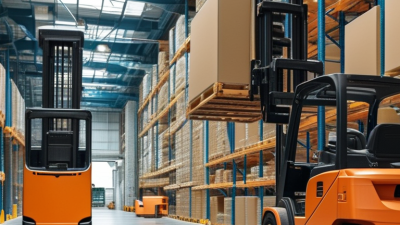
Material handling systems move, store, identify, and protect goods inside warehouses, factories, and distribution centers. The ten main categories include conveyors, sortation equipment, automated storage and retrieval systems, mobile robots, guided vehicles, cranes, lifts, palletizers, picking systems, and warehouse control software. Together, they connect receiving docks with storage locations and outbound loading areas.
Their value is operational, not merely technical. A conveyor can reduce walking around a packing station, while barcode scanning improves location accuracy. Automated storage can use vertical space in a compact facility. Mobile equipment can support repetitive transport during labor shortages. The MHI 2024 Annual Industry Report found that 55% of respondents planned to increase supply chain innovation investment. However, automation does not fix poor layouts or inaccurate inventory data. That mistake remains common.
Tips: Map product flows before selecting equipment. Measure order profiles, aisle widths, peak volumes, and local power conditions. Check safety training, maintenance access, spare parts, and software compatibility. The World Bank’s Logistics Performance Index 2023 highlights tracking and tracing as important logistics capabilities. Therefore, every system should produce usable operational data. Start with one measurable bottleneck. A perfect design rarely exists.
Key Criteria for Comparing Material Handling Systems Worldwide
10 Best Material Handling Systems for Global Buyers
Key Criteria for Comparing Material Handling Systems Worldwide
Global buyers should compare material handling systems through measurable operating conditions, not catalogue appearance. The 2024 MHI Annual Industry Report found that 55% of supply chain professionals planned to increase investment in automation. That figure signals demand, but it does not prove every facility needs robotics. A cold-storage warehouse, for example, may value sealed components and remote diagnostics more than maximum speed.
Start with throughput, load range, travel distance, and peak-season flexibility. The International Federation of Robotics reported 41,624 professional service robots for transportation and logistics installed in 2022. Buyers should ask whether a system supports mixed pallets, damaged cartons, and uneven floor surfaces. Small failures become expensive when spare parts cross borders. They also need clear data on energy use, noise, safety controls, and operator training.
Integration deserves equal attention. A technically impressive conveyor can still underperform if warehouse software cannot exchange accurate inventory signals. The MHI report also indicated that 88% of respondents expected artificial intelligence adoption within five years. That forecast is useful, though forecasts can age badly. Buyers should request live demonstrations, reference sites in similar climates, and documented uptime calculations. Total cost should include installation, customs handling, maintenance travel, software updates, and eventual removal. Payback periods often look attractive until these details enter the spreadsheet.
10 Best Material Handling Systems for Global Buyers – Key Criteria for Comparing Material Handling Systems Worldwide
| Material Handling System | Typical Applications | Typical Load Range | Indicative Throughput | Space Efficiency | Flexibility | Automation Level | Suitable Operating Conditions | Key Advantages | Main Limitations | Global Buying Considerations |
|---|---|---|---|---|---|---|---|---|---|---|
| Conveyor Systems | Cartons, totes, pallets, cases, packaging lines, distribution centers and production areas | Approximately 1–2,000 kg per unit, depending on conveyor type and configuration | Approximately 500–10,000 units per hour; pallet systems may handle higher loads at lower rates | Medium; requires dedicated linear or powered floor space | Medium | Manual to fully automated | Indoor environments; specialized designs are available for dust, cold storage and washdown areas | Predictable flow, modular design, proven technology and relatively simple integration with scanners and controls | Fixed routing, limited adaptability to major layout changes and possible noise or maintenance at transfer points | Check voltage, guarding rules, emergency-stop requirements, noise limits, spare-parts availability and local electrical standards |
| Automated Storage and Retrieval Systems (AS/RS) | High-density storage and retrieval of pallets, totes, trays, cartons and small parts | Approximately 5–1,500 kg per storage unit, depending on the system type | Approximately 30–600 storage or retrieval cycles per hour per machine; system capacity varies by design | Very high; uses vertical space and narrow aisles efficiently | Medium | High to fully automated | Controlled indoor environments; temperature and humidity limits depend on equipment and stored goods | High storage density, accurate inventory control, reduced travel distance and reduced manual handling | High initial investment, detailed software integration and lower flexibility after construction | Evaluate seismic design, fire protection, building height, aisle clearances, software interoperability and local installation capability |
| Automated Sortation Systems | Parcel hubs, e-commerce fulfillment, cross-docking, order consolidation and outbound shipping | Typically 0.1–50 kg per item, depending on sorter technology | Approximately 2,000–25,000 items per hour; actual performance depends on item size and induction quality | High throughput within a defined footprint | Medium | High to fully automated | Indoor, controlled environments; requires stable item presentation and barcode or identification data | Fast routing to many destinations, reduced manual sorting and improved shipment consistency | Less suitable for irregular, fragile, wet or poorly labeled items; balancing and induction are critical | Confirm package dimensions, local parcel profiles, scanner standards, software interfaces, service coverage and noise restrictions |
| Autonomous Mobile Robots (AMRs) | Goods-to-person picking, line feeding, tote transport, replenishment and warehouse-to-workstation movement | Approximately 100–1,500 kg per robot or payload module | Commonly 30–150 missions per hour per robot, depending on travel distance, traffic and task complexity | High; routes can be changed without installing fixed conveyors | Very high | High | Indoor facilities with suitable floors, reliable wireless coverage and clearly defined pedestrian controls | Scalable deployment, flexible routing, reduced manual travel and relatively limited fixed infrastructure | Battery charging, traffic management, floor quality and fleet-control integration affect performance | Review radio-frequency regulations, cybersecurity, pedestrian-safety rules, battery transport requirements and local technical support |
| Automated Guided Vehicles (AGVs) | Repeatable pallet movement, raw-material transport, production-line supply and finished-goods transfer | Approximately 500–5,000 kg, with specialized units designed for heavier loads | Approximately 10–60 transport missions per hour per vehicle, depending on route length and loading time | Medium; requires defined lanes, markers or navigation references | Medium | High | Indoor industrial sites with mapped routes, suitable floors and controlled traffic conditions | Consistent repetitive transport, improved traceability and reduced forklift traffic in defined areas | Less adaptable than AMRs when routes or workstations change; congestion can reduce utilization | Check machinery safety, traffic segregation, charging infrastructure, floor tolerances, localization method and regulatory approvals |
| Vertical Lift Modules (VLMs) | Small-parts storage, maintenance stores, kitting, spare parts and ergonomic order picking | Approximately 100–1,000 kg per tray, depending on tray width and design | Approximately 20–80 transactions per hour per machine, depending on item locations and operator workflow | Very high; uses vertical building space and minimizes aisle requirements | Medium to high | High | Clean, dry indoor environments; suitable for controlled manufacturing and warehouse areas | High-density storage, improved picking ergonomics, better inventory control and reduced search time | Limited tray dimensions, height restrictions and possible bottlenecks when many operators share one unit | Verify ceiling height, floor loading, fire protection, local electrical requirements, seismic conditions and operator access rules |
| Shuttle Storage Systems | High-density pallet or carton storage, cold storage, buffer areas and high-volume inventory holding | Approximately 50–1,500 kg per pallet, tote or carrier | Approximately 30–200 pallet movements per hour per aisle or shuttle, depending on depth and layout | Very high; reduces storage aisles and increases cubic utilization | Medium | High to fully automated | Ambient, chilled or frozen warehouses when components are rated for the required temperature range | High storage density, good scalability and efficient use of expensive warehouse space | Requires compatible load units, accurate inventory data and careful control of replenishment and retrieval priorities | Assess fire codes, cold-temperature battery performance, pallet quality, rack certification, seismic requirements and maintenance access |
| Robotic Palletizing and Depalletizing | Case packing, pallet building, pallet breakdown, production lines and distribution-center receiving | Typically 5–50 kg per case or handling unit; pallet payload depends on robot and tooling | Approximately 300–1,500 cases per hour, depending on pattern, product stability and robot configuration | High; can replace repetitive manual handling within a compact cell | Medium | High to fully automated | Indoor production and warehouse environments; product presentation must be consistent | Repeatable pallet patterns, improved ergonomics, reduced injury exposure and consistent cycle times | Product variation, unstable packaging and frequent changeovers may require advanced vision and tooling | Confirm machine guarding, robot safety standards, gripper suitability, pallet dimensions, changeover requirements and local service skills |
| Automated Picking Systems | Piece picking, goods-to-person fulfillment, pharmaceutical distribution, grocery and high-SKU operations | Typically 0.05–25 kg per item or tote; heavier systems are available for case picking | Approximately 200–1,200 picks per hour per workstation, depending on item mix and presentation | High; combines dense storage with ergonomic workstations | Medium to high | High | Clean, dry and controlled indoor environments; special designs may support temperature-sensitive goods | High picking productivity, reduced walking, improved accuracy and ergonomic operator positions | Requires accurate master data, consistent containers and integration with warehouse-management software | Evaluate labor availability, SKU profile, order-line distribution, data privacy, software localization and after-sales training |
| Overhead Crane and Hoist Systems | Steel handling, machinery manufacturing, shipbuilding, maintenance workshops and heavy-load production | Approximately 1–500 tonnes, depending on crane configuration and duty classification | Usually measured by lifts or cycles per hour rather than units per hour; commonly 5–30 cycles per hour in general industrial use | High floor-space efficiency; uses overhead building volume | Medium | Manual, semi-automated or automated | Industrial environments; equipment must be selected for temperature, dust, corrosive atmospheres and outdoor exposure where applicable | Handles very heavy loads, keeps floor aisles available and supports precise positioning | Requires adequate building structure, trained operators, inspections and controlled exclusion zones | Verify structural calculations, lifting regulations, inspection intervals, duty class, power supply, environmental protection and operator certification |

Note: Throughput, payload and capacity figures are indicative industry ranges rather than guaranteed performance. Final specifications depend on layout, product dimensions, load stability, operating schedule, software integration, safety requirements and local building regulations.
Automated Storage and Retrieval Systems for High-Volume Facilities
Automated Storage and Retrieval Systems (ASRS) are reshaping high-volume facilities. They connect storage, software, conveyors, and robotic cranes into one controlled workflow. MHI’s 2024 Annual Industry Report found that 55% of supply-chain professionals planned to increase automation investment. That figure reflects pressure, not fashion.
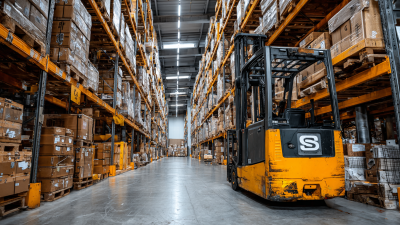
A well-designed ASRS can store pallets in narrow aisles and retrieve them without repeated forklift travel. Operators receive goods at ergonomic stations, often under brighter, safer working conditions. DHL’s 2024 Robotics Trend Report reported that 73% of logistics professionals expect robotics to become standard within five years. In practice, performance depends on accurate inventory data, stable packaging, and disciplined maintenance. Small barcode errors can stop a fast system.
Capacity matters more than impressive speed. Buyers should examine hourly throughput, storage density, peak-season demand, fire protection, and recovery procedures. The cheapest design may become expensive when product sizes change. That assumption deserves scrutiny. A facility handling 10,000 daily movements needs tested software rules, spare components, and trained technicians nearby. Energy use also deserves measurement; an idle conveyor network can quietly erode savings. Data from the U.S. Department of Energy shows that motors and material movement can represent a major industrial electricity load, although each site differs. Careful simulation remains essential before construction begins.
Conveyor, Sortation, and Pallet Handling Systems for Efficient Flow
Global buyers need material handling systems that keep products moving without creating new bottlenecks. Conveyors provide steady transport between receiving, storage, picking, and shipping areas. Belt conveyors suit cartons and irregular packages. Roller conveyors handle rigid loads with less surface contact. In a 20,000-square-meter facility, a clear transfer path can reduce walking, waiting, and manual lifting.
Sortation systems direct cartons to specific docks, zones, or order lanes. Diverting arms, pop-up rollers, and sliding shoes support different package sizes. Accurate scanning is essential. A poorly placed scanner can send one carton to the wrong lane and delay an entire shipment. I have seen facilities improve flow by separating fast-moving orders from fragile items. The design looked simple, but the testing required patience.
Pallet handling systems manage heavier loads near storage and production areas. Chain conveyors, turntables, lifts, and pallet dispensers can reduce forklift traffic. Load weight, pallet condition, and aisle width must guide equipment selection. Safety sensors, guarded pinch points, and accessible emergency stops are not optional details. No system is perfect. Dust, damaged pallets, and changing order volumes can expose weak assumptions. A practical design leaves room for maintenance, future expansion, and human judgment. Performance should be measured through throughput, misroutes, downtime, and recovery time, not appearance alone.
Robotics, Software, and Integrated Solutions for Modern Warehouses
10 Best Material Handling Systems for Global Buyers
Robotics, software, and integrated solutions now shape modern warehouse performance. Mobile robots can move cartons between receiving docks, storage aisles, and packing stations. Robotic arms handle repetitive picking, palletizing, and depalletizing tasks. Automated storage systems use vertical space effectively, especially where floor area is expensive. Yet automation needs practical planning. A robot cannot fix unclear processes.
Warehouse software connects equipment with daily decisions. A warehouse execution platform can balance orders, labor, and machine capacity. Inventory software improves location accuracy through barcode or sensor data. Clear dashboards help supervisors spot delays before a late truck leaves. Integration with enterprise and transport systems also reduces manual entry. Reliable application interfaces matter across different countries and facilities.
Global buyers should examine safety controls, language support, local service, spare parts, and data ownership. A strong solution should keep operating when one device fails. That sounds basic.
Start with a limited pilot. Measure travel distance, order accuracy, uptime, energy use, and recovery time. Real warehouses contain damaged cartons, changing priorities, and uneven product sizes. These exceptions often expose weak designs. Software may need adjustment after operators test it during a busy shift. Human oversight still matters, even in highly automated sites. The best system is not always the most advanced one. It is the solution that workers can understand, maintain, and trust.
Related Posts
-
2026 Top Handling Equipment Trends for Global Buyers?
-
How to Choose the Right Material Lifting Equipment for Your Needs?
-
Revolutionizing Warehousing: How Advanced Material Handling Equipment Boosts Efficiency by 30% in Supply Chains
-
Top Material Handling Solutions for 2026 What Buyers Need to Know
-
Innovative Barrel Lifting Equipment Shines at the 137th Canton Fair in Guangzhou
-
7 Essential Tips for Choosing the Best Material Handling Equipment for Your Business