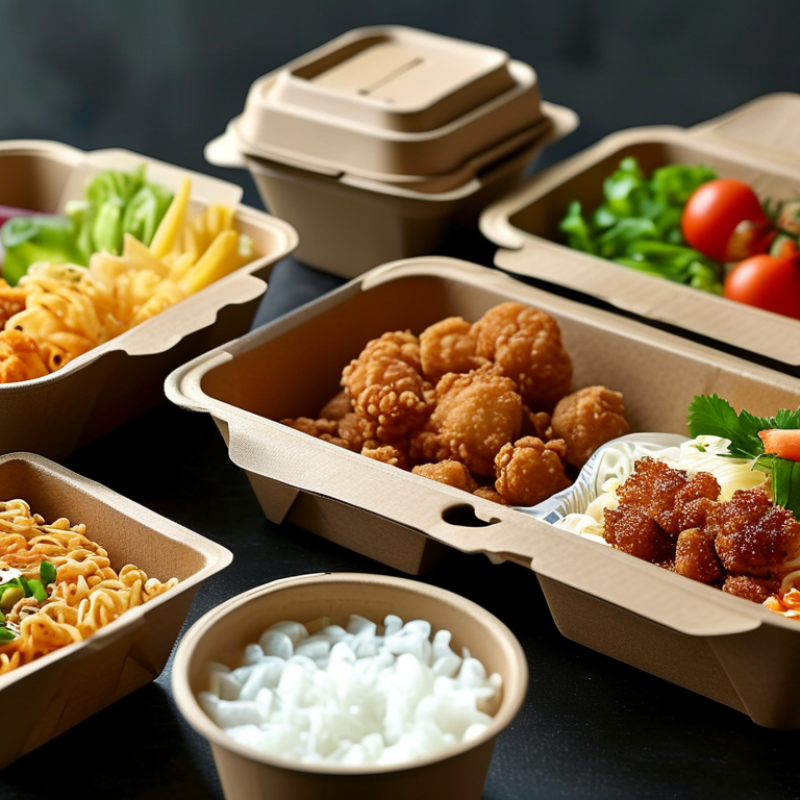
| Molded Fiber Clamshell | Bagasse, recycled paper fiber, bamboo fiber, or other molded cellulose fibers; may include a water- or grease-resistant coating. | Rice meals, burgers, fried foods, bakery products, meal kits, and combination takeaway meals. | Generally suitable for hot food service; exact limits depend on fiber density, coating, moisture, and manufacturer testing. | Uses renewable or recycled fiber; lightweight; can reduce dependence on fossil-based plastics; suitable for printed natural-material positioning. | Food-contact coatings may affect end-of-life options. Wet or heavily contaminated fiber is difficult to recycle. Barrier additives must be assessed separately. | Recyclable only where accepted by local paper mills and collection systems. Certified industrially compostable versions may be accepted in commercial composting facilities. | Claims such as “compostable” require recognized certification and suitable disposal infrastructure. Food-contact compliance must be demonstrated for the destination market. | Buyers should request fiber source information, coating composition, grease-resistance data, food-contact declarations, compostability or recyclability evidence, and migration-test results. | Strong sustainability-led option |
| Paperboard Folding Carton | Folding boxboard, kraft paperboard, or recycled paperboard, normally with printing and optional barrier treatment. | Sandwiches, bakery items, pizza slices, snacks, dry meals, and multipack takeaway foods. | Suitable for ambient and warm foods; performance declines with high moisture, steam, oil, or long holding times unless coated. | Efficient to transport and store flat; paper-based; widely recognized by consumers; often compatible with established paper collection systems. | Plastic or chemical barriers can complicate recycling. Paperboard loses strength when saturated with grease or liquid. | Usually recyclable when clean and accepted by the local paper stream. Compostability depends on the full structure, inks, adhesives, and coating. | Packaging placed on the EU market may be affected by the Packaging and Packaging Waste Regulation, including recyclability and material-reduction requirements. National rules vary elsewhere. | Specify board grammage, recycled content, coating type, ink system, stacking strength, moisture resistance, and flat-pack dimensions. | Mainstream paper-based solution |
| Corrugated Takeaway Box | Fluted corrugated fiberboard with kraft or test liner; may include a grease-resistant treatment. | Pizza, large meals, catering portions, bakery assortments, and foods requiring extra compression strength. | Performs well with hot and dry foods; prolonged steam, liquid, or direct contact with very oily foods can weaken the board. | High strength-to-weight ratio; commonly recyclable; can be produced with recycled fiber; ships efficiently when flat-packed. | Wet or oil-soaked corrugated board is generally unsuitable for paper recycling. Laminations and coatings can reduce fiber recovery. | Recyclable through corrugated or paper recycling systems when clean and dry. Composting depends on certification and local facility acceptance. | Food-contact surfaces, inks, adhesives, and grease barriers must meet applicable national requirements. Recycling claims must reflect local collection reality. | Buyers should confirm edge-crush or compression performance, food-contact suitability, print coverage, recycled-fiber percentage, and pallet efficiency. | High-strength fiber option |
| PP Reusable Container | Polypropylene, commonly injection molded; may include a reusable lid and snap-fit or leak-resistant closure. | Prepared meals, soups, salads, noodles, sauces, meal delivery, and returnable food-service programs. | Good resistance to hot foods and repeated washing when designed and validated for reuse; operating limits must follow the product specification. | Can replace many single-use containers when returned and reused enough times; durable and relatively lightweight. | Requires reverse logistics, washing, inspection, and loss control. It is fossil-based and may remain in the environment if mismanaged. | Technically recyclable in many systems, but actual recovery depends on local polypropylene collection and sorting infrastructure. | Reusable claims should be supported by a defined reuse system. Food-contact, dishwasher, chemical-migration, and hygiene requirements must be assessed. | Buyers should model return rates, washing energy and water, replacement rates, container loss, food-contact documentation, and total lifecycle impact. | Best for organized reuse systems |
| PP Single-Use Container | Polypropylene, often clear or semi-clear, with hinged or separate lids. | Hot meals, microwaveable dishes, deli foods, soups, curries, salads, and chilled prepared foods. | Generally suitable for hot food and microwave use when specifically designed and labeled for that purpose; not all PP products are microwave-safe. | Lightweight; good moisture and grease resistance; can support downgauging and efficient transport. | Single-use fossil-based plastic; recycling rates vary significantly by country and municipality; lightweight items may be missed by sorting systems. | Recyclable where polypropylene collection and reprocessing exist. Emptying and rinsing may be needed for successful recycling. | Plastic taxes, extended producer responsibility fees, recycled-content mandates, and single-use restrictions may apply depending on the market. | Confirm resin identification, heat performance, seal integrity, recycled-content percentage, food-contact compliance, and local EPR obligations. | Performance-focused plastic option |
| PET Deli or Salad Bowl | Polyethylene terephthalate, typically clear and rigid, with a snap-on or hinged lid. | Cold salads, fruit, desserts, sandwiches, chilled prepared foods, and display-ready deli products. | Best suited to chilled or ambient foods; standard PET is not generally intended for high-temperature hot-fill or microwave use. | High clarity supports product visibility; relatively lightweight; PET has established bottle-to-bottle and food-tray recycling streams in some markets. | Limited suitability for hot foods; additives, labels, lids, and multilayer structures may reduce sorting or recycling compatibility. | Recyclable where PET packaging is collected and accepted. Lids and labels may require material compatibility with the local recycling system. | Recycled-content requirements and EPR rules may apply. Avoid unsupported “100% recyclable” claims unless the complete pack is accepted in the target market. | Specify food-contact recycled PET status, clarity, impact resistance, lid compatibility, seal performance, and destination-country collection access. | Strong choice for chilled visibility |
| Paper Soup Cup | Paperboard with a polymer lining, dispersion coating, or other liquid barrier; commonly paired with a paper or plastic lid. | Soups, broths, noodles, porridge, hot beverages, and liquid takeaway meals. | Designed for hot liquids, but maximum holding time and temperature depend on the board, barrier, lid, and sealing specification. | Lower material weight than rigid reusable formats; paper-based exterior; suitable for efficient nesting and transport. | Liquid barriers and attached lids can complicate paper recycling. Leakage, condensation, and thermal performance must be controlled. | Recyclability depends on specialized cup collection or suitable paper mills. Compostable versions require certification and commercial composting access. | Barrier composition, PFAS status, food-contact compliance, cup-lid compatibility, and disposal instructions should be documented for each market. | Request leak testing, seam strength, hot-fill performance, lid fit, coating declaration, and market-specific recycling or composting guidance. | Practical hot-liquid format |
| Aluminum Food Tray | Thin-gauge aluminum, sometimes supplied with a paperboard lid or laminated cover. | Roasted meals, baked dishes, airline-style meals, catering portions, and oven-ready foods. | Excellent heat resistance and suitable for oven use when the full package specification permits it; not normally suitable for microwave use because of metal. | Aluminum can be recycled repeatedly when collected; high material value can support recovery in established systems. | Primary aluminum production is energy-intensive. Foil or trays with heavy food residue may not be recovered in all local systems. | Recyclable in areas with aluminum collection; users generally need to empty or scrape food residue before disposal. | Must meet food-contact and metal-specific requirements. Labels must clearly communicate oven and microwave limitations where relevant. | Confirm alloy, wall thickness, forming quality, lid compatibility, oven-temperature validation, nesting efficiency, and local metal collection. | High-heat and recovery-oriented option |
| Expanded or Solid Molded Fiber Tray | Cellulose fiber, molded pulp, or molded paperboard, with optional moisture and grease barrier. | French fries, snacks, side dishes, breakfast foods, bakery products, and compartmented meals. | Suitable for warm foods; performance varies with steam, oil, liquid content, and barrier technology. | Can use renewable or recycled fiber; lightweight; often stackable and suitable for portion control. | Fiber recovery is reduced by food contamination and some coatings. High-moisture meals may require additional liners or inserts. | Recyclability or compostability depends on the complete tray and local infrastructure. Industrial composting may be required for certified compostable products. | Do not equate “paper-based” with automatically recyclable or compostable. Verify coatings, additives, inks, adhesives, and certification scope. | Buyers should test oil resistance, wet strength, stacking, nesting, odor neutrality, food-contact migration, and disposal labeling. | Flexible fiber alternative |
| Bio-Based or Compostable Plastic Container | PLA, PHA, bio-based PP, or other certified bio-based polymers; bio-based content and compostability are separate attributes. | Cold salads, desserts, fruit, chilled foods, and selected short-life food-service applications. | Many PLA formats are intended for cold or moderate-temperature foods; heat performance varies widely and must be verified. | Some materials use renewable feedstocks; certified compostable products may offer an alternative where organic-waste collection exists. | Bio-based does not automatically mean biodegradable or compostable. Compostable plastics can contaminate conventional plastic recycling and often need industrial composting. | Only place in an organics stream when the product is certified and the local facility accepts it. Otherwise, follow the destination market’s disposal rules. | Compostability claims require recognized standards, certification, and accurate disposal instructions. Local single-use plastic and labeling rules may apply. | Request polymer identity, bio-based content evidence, compostability certificate, heat limits, migration tests, and confirmation of local end-of-life infrastructure. | Infrastructure-dependent option |
| Glass Reusable Container | Food-contact glass with a reusable plastic, metal, or composite lid. | Premium prepared meals, salads, sauces, desserts, meal delivery, and deposit-return programs. | Good temperature stability; thermal-shock resistance and oven or microwave suitability depend on the glass design and lid specification. | Highly durable when reused many times; glass is inert and widely recyclable; strong premium and quality positioning. | Heavy and breakable; transport emissions can be higher; requires collection, washing, inspection, and reverse logistics for reuse. | Glass is recyclable where separate glass collection exists. Reuse normally provides the greatest benefit when return rates and transport distances are controlled. | Reuse, hygiene, breakage, and food-contact requirements must be documented. Lids and seals may follow different recycling or compliance routes. | Model washing, breakage, return distance, container rotation, deposit value, and handling requirements before selecting glass for global distribution. | Premium closed-loop solution |